

- University
- Academic
- Schools/Vocational Schools
- Vocational School of Justice
- Vocational School
- Vocational School
- Department of Banking and Insurance (Turkish)
- Department of Computer Programming (Turkish)
- Department of Foreign Trade (Turkish)
- Department of Graphic Design (Turkish)
- Department of Interior Design (Turkish)
- Department of Construction Technology (Turkish)
- Department of Occupational Health and Safety (Turkish)
- Department of Media and Communication (Turkish)
- Department of Architectural Restoration (Turkish)
- Department of Radio and Tv Programming (Turkish)
- Department of Civil Aviation Cabin Services (Turkish)
- Department of Civil Aviation Transportation Management (Turkish)
- Department of Tourism and Hotel Management (Turkish)
- Department of Applied English Translation
- Vocational School Of Health Services
- Vocational School Of Health Services
- Department of Child Development (Turkish)
- Department of Physiotherapy (Turkish)
- Department of Paramedic (Turkish)
- Department of Opticianry (Turkish)
- Department of Medical Documentation and Secreteriat (Turkish)
- Department of Medical Imaging Techniques (Turkish)
- Department of Medical Laboratory Techniques (Turkish)
- Department of Elderly Care (Turkish)
- School of Applied Management Sciences
- School of Foreign Languages
- Faculties
- Faculty of Arts and Sciences
- Faculty of Fine Arts and Design
- Faculty of Law
- Faculty of Communication
- Faculty of Business
- Faculty of Engineering
- Faculty of Engineering
- Department of Computer Engineering
- Department of Biomedical Engineering
- Department of Electrical and Electronics Engineering
- Department of Industrial Engineering
- Department of Food Engineering
- Department of Genetics and Bioengineering
- Department of Aerospace Engineering
- Department of Civil Engineering
- Department of Mechanical Engineering
- Department of Mechatronics Engineering
- Department of Software Engineering
- Faculty of Health Sciences
- Medicine
- Graduate School
- Common Courses
- Schools/Vocational Schools
- Research
- Research Centers
- Library
- Smart Campus
- Technology Transfer Office
- İzmir Sciencepark
- Continuous Education Center (EKOSEM)
- Children's University
- Ethics Committee
- Teaching and Learning Center (EKOEĞİTİM)
- Psychology Application and Research Center
- Researcher Training Coordinatorship
- Research Collaborations And Innovation Coordinatorship
- Campus
- INTERNATIONAL
- Contact
- 25TH YEAR
Department of Industrial Engineering
IE 316 | Course Introduction and Application Information
| Course Name |
Manufacturing Systems
|
|
Code
|
Semester
|
Theory
(hour/week) |
Application/Lab
(hour/week) |
Local Credits
|
ECTS
|
|
IE 316
|
SPRING
|
3
|
0
|
3
|
6
|
| Prerequisites | - | |||||
| Course Language | English | |||||
| Course Type | Required (Core Course) | |||||
| Course Level | First Cycle | |||||
| Mode of Delivery | Face to face | |||||
| Teaching Methods and Techniques of the Course |
Group Work Problem Solving Lecture / Presentation |
|||||
| National Occupational Classification Code | - | |||||
| Course Coordinator |
|
|||||
| Course Lecturer(s) |
|
|||||
| Assistant(s) | - | |||||
| Course Objectives | The objective of this course is to teach basic manufacturing techniques, different types of manufacturing systems and measures to evaluate system performance. | |||||||||||||||||||||||||||||||||||||||||||||||||||||
| Learning Outcomes |
The students who succeeded in this course;
|
|||||||||||||||||||||||||||||||||||||||||||||||||||||
| Course Description | Assembly lines, transfer lines, flexible manufacturing systems and cellular manufacturing systems. | |||||||||||||||||||||||||||||||||||||||||||||||||||||
| Related Sustainable Development Goals |
-
|
|||||||||||||||||||||||||||||||||||||||||||||||||||||
|
|
Core Courses |
|
| Major Area Courses |
X
|
|
| Supportive Courses |
|
|
| Media and Managment Skills Courses |
|
|
| Transferable Skill Courses |
|
WEEKLY SUBJECTS AND RELATED PREPARATION STUDIES
| Week | Subjects | Required Materials | Learning Outcome |
| 1 | Introduction, Manufacturing Operations, Manufacturing Models, Metrics and Automation | Course Book - Chapters 1-4 | LO1 |
| 2 | Manufacturing Systems and Single Station Cells | Course Book - Chapters 13-14 | LO2 |
| 3 | Manual Assembly Lines | Course Book - Chapter 15 | LO3 |
| 4 | Manual Assembly Lines + Identifying Project Groups | Course Book - Chapter 15 | LO4 |
| 5 | Automated Production Lines | Course Book - Chapter 16 | LO3 |
| 6 | Automated Production Lines | Course Book - Chapter 16 | LO4 |
| 7 | General Topic Review | - | |
| 8 | Midterm | - | |
| 9 | Automated Assembly Systems | Course Book - Chapter 17 | LO4 |
| 10 | Cellular Manufacturing | Course Book - Chapter 18 | LO5 |
| 11 | Cellular Manufacturing | Course Book - Chapter 18 | LO5 |
| 12 | Flexible Manufacturing Systems | Course Book - Chapter 19 | LO3 |
| 13 | Flexible Manufacturing Systems | Course Book - Chapter 19 | LO3 |
| 14 | Project Presentations | - | |
| 15 | Project Presentations | - | |
| 16 | Final Exam | - |
| Course Notes/Textbooks | Groover Mikell P. (2007). Automation Production Systems and C.I.M. Prentice-Hall: Englewood Cliffs N.J. 3/e 2007 |
| Suggested Readings/Materials | - |
EVALUATION SYSTEM
| Semester Activities | Number | Weighting | LO1 | LO2 | LO3 | LO4 | LO5 |
| Quizzes / Studio Critiques | 2 | 20 | X | X | X | X | |
| Project | 1 | 20 | X | X | X | X | |
| Midterm | 1 | 25 | X | X | X | X | |
| Final Exam | 1 | 35 | X | X | X | ||
| Total | 5 | 100 |
ECTS / WORKLOAD TABLE
| Semester Activities | Number | Duration (Hours) | Workload |
|---|---|---|---|
| Participation | - | - | - |
| Theoretical Course Hours | 16 | 3 | 48 |
| Laboratory / Application Hours | - | - | - |
| Study Hours Out of Class | 14 | 3 | 42 |
| Field Work | - | - | - |
| Quizzes / Studio Critiques | 2 | 14 | 28 |
| Portfolio | - | - | - |
| Homework / Assignments | - | - | - |
| Presentation / Jury | - | - | - |
| Project | 1 | 30 | 30 |
| Seminar / Workshop | - | - | - |
| Oral Exams | - | - | - |
| Midterms | 1 | 13 | 13 |
| Final Exam | 1 | 19 | 19 |
| Total | 180 |
COURSE LEARNING OUTCOMES AND PROGRAM QUALIFICATIONS RELATIONSHIP
| # | PC Sub | Program Competencies/Outcomes | * Contribution Level | ||||
| 1 | 2 | 3 | 4 | 5 | |||
| 1 |
Engineering Knowledge: Knowledge of mathematics, science, basic engineering, computation, and related engineering discipline-specific topics; the ability to apply this knowledge to solve complex engineering problems. |
||||||
| 1 |
Mathematics |
||||||
| 2 |
Science |
||||||
| 3 |
Basic Engineering |
||||||
| 4 |
Computation |
||||||
| 5 |
Related engineering discipline-specific topics |
LO1 | LO2 | ||||
| 6 |
The ability to apply this knowledge to solve complex engineering problems |
||||||
| 2 |
Problem Analysis: Ability to identify, formulate and analyze complex engineering problems using basic knowledge of science, mathematics and engineering, and considering the UN Sustainable Development Goals relevant to the problem being addressed. |
||||||
| 3 |
Engineering Design: The ability to devise creative solutions to complex engineering problems; the ability to design complex systems, processes, devices or products to meet current and future needs, considering realistic constraints and conditions. |
||||||
| 1 |
Ability to design creative solutions to complex engineering problems |
LO4 LO5 | |||||
| 2 |
Ability to design complex systems, processes, devices or products to meet current and future needs, considering realistic constraints and conditions |
||||||
| 4 |
Use of Techniques and Tools: Ability to select and use appropriate techniques, resources, and modern engineering and computing tools, including estimation and modeling, for the analysis and solution of complex engineering problems, while recognizing their limitations. |
LO3 | |||||
| 5 |
Research and Investigation: Ability to use research methods to investigate complex engineering problems, including literature research, designing and conducting experiments, collecting data, and analyzing and interpreting results. |
||||||
| 1 |
Literature research for the study of complex engineering problems |
||||||
| 2 |
Designing experiments |
||||||
| 3 |
Ability to use research methods, including conducting experiments, collecting data. analyzing and interpreting results |
||||||
| 6 |
Global Impact of Engineering Practices: Knowledge of the impacts of engineering practices on society, health and safety, economy, sustainability, and the environment, within the context of the UN Sustainable Development Goals; awareness of the legal implications of engineering solutions. |
||||||
| 1 |
Knowledge of the impacts of engineering practices on society, health and safety, economy, sustainability, and the environment, within the context of the UN Sustainable Development Goals |
||||||
| 2 |
Awareness of the legal implications of engineering solutions |
||||||
| 7 |
Ethical Behavior: Acting in accordance with the principles of the engineering profession, knowledge about ethical responsibility; awareness of being impartial, without discrimination, and being inclusive of diversity. |
||||||
| 1 |
Acting in accordance with the principles of the engineering profession, knowledge about ethical responsibility ethical responsibility |
||||||
| 2 |
Awareness of being impartial and inclusive of diversity, without discriminating on any subject |
||||||
| 8 |
Individual and Teamwork: Ability to work effectively, individually and as a team member or leader on interdisciplinary and multidisciplinary teams (face-to-face, remote or hybrid). |
||||||
| 1 |
Ability to work individually and within the discipline |
||||||
| 2 |
Ability to work effectively as a team member or leader in multidisciplinary teams (face-to-face, remote or hybrid) |
||||||
| 9 |
Verbal and Written Communication: Taking into account the various differences of the target audience (such as education, language, profession) on technical issues. |
||||||
| 1 |
Ability to communicate verbally |
||||||
| 2 |
Ability to communicate effectively in writing |
||||||
| 10 |
Project Management: Knowledge of business practices such as project management and economic feasibility analysis; awareness of entrepreneurship and innovation. |
||||||
| 1 |
Knowledge of business practices such as project management and economic feasibility analysis |
||||||
| 2 |
Awareness of entrepreneurship and innovation |
||||||
| 11 |
Lifelong Learning: Lifelong learning skills that include being able to learn independently and continuously, adapting to new and developing technologies, and thinking questioningly about technological changes. |
||||||
*1 Lowest, 2 Low, 3 Average, 4 High, 5 Highest
NEWSALL NEWS



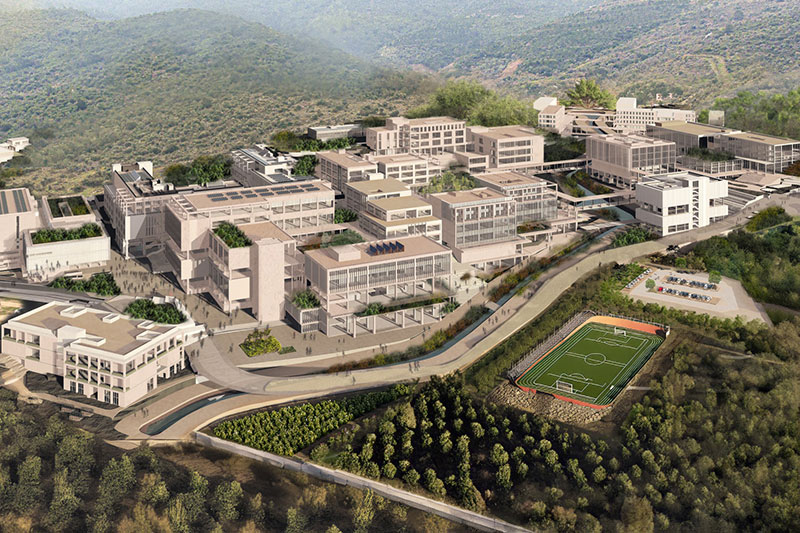
IZMIR UNIVERSITY OF ECONOMICS GÜZELBAHÇE CAMPUS
DetailsGLOBAL CAREER
As Izmir University of Economics transforms into a world-class university, it also raises successful young people with global competence.
More..CONTRIBUTION TO SCIENCE
Izmir University of Economics produces qualified knowledge and competent technologies.
More..VALUING PEOPLE
Izmir University of Economics sees producing social benefit as its reason for existence.
More..
You are one step ahead with your graduate education at Izmir University of Economics.