

- University
- Academic
- Schools/Vocational Schools
- Vocational School of Justice
- Vocational School
- Vocational School
- Department of Banking and Insurance (Turkish)
- Department of Computer Programming (Turkish)
- Department of Foreign Trade (Turkish)
- Department of Graphic Design (Turkish)
- Department of Interior Design (Turkish)
- Department of Construction Technology (Turkish)
- Department of Occupational Health and Safety (Turkish)
- Department of Media and Communication (Turkish)
- Department of Architectural Restoration (Turkish)
- Department of Radio and Tv Programming (Turkish)
- Department of Civil Aviation Cabin Services (Turkish)
- Department of Civil Aviation Transportation Management (Turkish)
- Department of Tourism and Hotel Management (Turkish)
- Department of Applied English Translation
- Vocational School Of Health Services
- Vocational School Of Health Services
- Department of Child Development (Turkish)
- Department of Physiotherapy (Turkish)
- Department of Paramedic (Turkish)
- Department of Opticianry (Turkish)
- Department of Medical Documentation and Secreteriat (Turkish)
- Department of Medical Imaging Techniques (Turkish)
- Department of Medical Laboratory Techniques (Turkish)
- Department of Elderly Care (Turkish)
- School of Applied Management Sciences
- School of Foreign Languages
- Faculties
- Faculty of Arts and Sciences
- Faculty of Fine Arts and Design
- Faculty of Law
- Faculty of Communication
- Faculty of Business
- Faculty of Engineering
- Faculty of Engineering
- Department of Computer Engineering
- Department of Biomedical Engineering
- Department of Electrical and Electronics Engineering
- Department of Industrial Engineering
- Department of Food Engineering
- Department of Genetics and Bioengineering
- Department of Aerospace Engineering
- Department of Civil Engineering
- Department of Mechanical Engineering
- Department of Mechatronics Engineering
- Department of Software Engineering
- Faculty of Health Sciences
- Medicine
- Graduate School
- Common Courses
- Schools/Vocational Schools
- Research
- Research Centers
- Library
- Smart Campus
- Technology Transfer Office
- İzmir Sciencepark
- Continuous Education Center (EKOSEM)
- Children's University
- Ethics Committee
- Teaching and Learning Center (EKOEĞİTİM)
- Psychology Application and Research Center
- Researcher Training Coordinatorship
- Research Collaborations And Innovation Coordinatorship
- Campus
- INTERNATIONAL
- Contact
- 25TH YEAR
Department of Industrial Engineering
Course Structure Diagram with Credits
To see the course details (such as objectives, learning outcomes, content, assessment and ECTS workload), click the relevant Course Code given in the table below.
| 1. Year Fall Semester | ||||||
| Code | Pre. | Course Name | Theory | App/Lab | Local Credits | ECTS |
| CHEM 100 | General Chemistry | 2 | 2 | 3 | 6 | |
| ENG 101 | Academic Skills in English I | 2 | 2 | 3 | 3 | |
| FENG 101 | Fundamentals of Engineering Culture | 2 | 0 | 2 | 4 | |
| IUE 100 | Orientation and Career Planning | 1 | 0 | 1 | 2 | |
| MATH 153 | Calculus I | 2 | 2 | 3 | 6 | |
| PHYS 100 | General Physics I | 2 | 2 | 3 | 6 | |
| SFL 1013 | Second Foreign Languages I | 2 | 2 | 3 | 3 | |
| Total : | 30 | |||||
| 1. Year Spring Semester | ||||||
| Code | Pre. | Course Name | Theory | App/Lab | Local Credits | ECTS |
| ENG 102 | Academic Skills in English II | 2 | 2 | 3 | 4 | |
| IE 102 | Introduction to Industrial Engineering | 3 | 0 | 3 | 4 | |
| MATH 154 |

|
Calculus II | 2 | 2 | 3 | 6 |
| MATH 250 |
|
Linear Algebra for Engineers | 3 | 0 | 3 | 6 |
| SE 113 | Introduction to Programming | 2 | 2 | 3 | 6 | |
| SFL 1024 | Second Foreign Languages II | 2 | 2 | 3 | 4 | |
| Total : | 30 | |||||
| 2. Year Fall Semester | ||||||
| Code | Pre. | Course Name | Theory | App/Lab | Local Credits | ECTS |
| IE 215 | Engineering Economics | 3 | 0 | 3 | 5 | |
| IE 251 |
|
Optimization I | 2 | 2 | 3 | 6 |
| MATH 207 |
|
Introduction to Differential Equations I | 2 | 2 | 3 | 5 |
| MATH 240 |
|
Probability for Engineers | 3 | 0 | 3 | 6 |
| SFL 201 | Second Foreign Languages III | 2 | 2 | 3 | 4 | |
| TURK 100 | Turkish | 4 | 0 | 4 | 4 | |
| Total : | 30 | |||||
| 2. Year Spring Semester | ||||||
| Code | Pre. | Course Name | Theory | App/Lab | Local Credits | ECTS |
| ENG 210 | Technical English for Engineers | 3 | 0 | 3 | 4 | |
| IE 213 |
|
Computational Thinking for Operations Research | 3 | 0 | 3 | 5 |
| IE 222 |
|
Production Systems Analysis | 3 | 0 | 3 | 5 |
| IE 252 |
|
Optimization II | 2 | 2 | 3 | 6 |
| MATH 236 |
|
Engineering Statistics | 3 | 0 | 3 | 6 |
| SFL 202 | Second Foreign Languages IV | 2 | 2 | 3 | 4 | |
| Total : | 30 | |||||
| 3. Year Fall Semester | ||||||
| Code | Pre. | Course Name | Theory | App/Lab | Local Credits | ECTS |
| IE 261 | Industrial Information Systems | 3 | 0 | 3 | 5 | |
| IE 321 |
|
Dynamic and Nonlinear Programming | 2 | 2 | 3 | 6 |
| IE 322 | Work Systems Analysis and Design | 3 | 0 | 3 | 6 | |
| IE 323 |
|
Production Planning,Design and Control | 3 | 0 | 3 | 6 |
| IE 334 |
|
Statistical Quality Control | 2 | 2 | 3 | 7 |
| Total : | 30 | |||||
| 3. Year Spring Semester | ||||||
| Code | Pre. | Course Name | Theory | App/Lab | Local Credits | ECTS |
| FENG 345 |
|
Numerical Methods for Engineers I | 2 | 2 | 3 | 7 |
| IE 316 | Manufacturing Systems | 3 | 0 | 3 | 6 | |
| IE 335 |
|
Simulation | 2 | 2 | 3 | 7 |
| IE 336 |
|
Advanced Statistics for Industrial Engineering | 3 | 0 | 3 | 6 |
| TMD 001 | Complementary Engineering Courses | 3 | 0 | 3 | 4 | |
| Total : | 30 | |||||
| 4. Year Fall Semester | ||||||
| Code | Pre. | Course Name | Theory | App/Lab | Local Credits | ECTS |
| ELEC 001 | Elective Course I | 3 | 0 | 3 | 5 | |
| ELEC 002 | Elective Course II | 3 | 0 | 3 | 5 | |
| ELEC 003 | Elective Course III | 3 | 0 | 3 | 5 | |
| FENG 497 |
|
Multidisciplinary Engineering Projects | 2 | 2 | 3 | 6 |
| HIST 100 | Principles of Atatürk and History of Revolution | 4 | 0 | 4 | 4 | |
| IEST 400 |
|
Engineering Summer Training (4 weeks) | 0 | 0 | 0 | 5 |
| Total : | 30 | |||||
| 4. Year Spring Semester | ||||||
| Code | Pre. | Course Name | Theory | App/Lab | Local Credits | ECTS |
| ELEC 004 | Elective Course IV | 3 | 0 | 3 | 5 | |
| ELEC 005 | Elective Course V | 3 | 0 | 3 | 5 | |
| ELEC 006 | Elective Course VI | 3 | 0 | 3 | 5 | |
| ELEC 007 | Elective Course VII | 3 | 0 | 3 | 5 | |
| FENG 498 |
|
Engineering Capstone | 0 | 6 | 3 | 6 |
| TMD 002 | Complementary Engineering Courses | 3 | 0 | 3 | 4 | |
| Total : | 30 | |||||
| Elective Courses | ||||||
| Code | Pre. | Course Name | Theory | App/Lab | Local Credits | ECTS |
| CE 320 | Application Development with MATLAB | 3 | 0 | 3 | 5 | |
| CE 322 | Pattern Recognition | 3 | 0 | 3 | 5 | |
| CE 340 | Cryptography and Network Security | 3 | 0 | 3 | 5 | |
| CE 344 | Advanced Machine Learning | 3 | 0 | 3 | 5 | |
| CE 345 | Introduction to Machine Learning | 3 | 0 | 3 | 5 | |
| CE 370 |
|
Distributed Database Systems | 3 | 0 | 3 | 5 |
| CE 390 |
|
Analysis of Algorithms | 3 | 0 | 3 | 5 |
| CE 395 | Special Topics in Machine Learning | 3 | 0 | 3 | 5 | |
| CE 401 |
|
Algorithms Design | 3 | 0 | 3 | 5 |
| CE 403 |
|
Computer Architecture and Organization | 2 | 2 | 3 | 5 |
| CE 455 | Deep Neural Networks | 3 | 0 | 3 | 5 | |
| CE 470 | Introduction to Neural Networks | 3 | 0 | 3 | 5 | |
| CE 477 | Data Science | 3 | 0 | 3 | 5 | |
| CIVE 209 | Technical Drawing | 2 | 2 | 3 | 4 | |
| IE 313 | Human Factors Engineering | 3 | 0 | 3 | 5 | |
| IE 314 |
|
Facility Planning | 3 | 0 | 3 | 5 |
| IE 315 |
|
Sequencing and Scheduling | 3 | 0 | 3 | 6 |
| IE 325 | Modeling and Analysis of Supply Chains | 3 | 0 | 3 | 5 | |
| IE 326 |
|
Inventory Planning | 3 | 0 | 3 | 6 |
| IE 327 |
|
Special Topics in Production Management | 3 | 0 | 3 | 6 |
| IE 328 | Production and Service Systems Management | 3 | 0 | 3 | 5 | |
| IE 329 | Lean Production | 3 | 0 | 3 | 5 | |
| IE 337 |
|
Industrial Applications of Simulations | 2 | 2 | 3 | 6 |
| IE 338 |
|
Stochastic Models in Manufacturing Systems | 3 | 0 | 3 | 6 |
| IE 342 |
|
Decision Theory | 3 | 0 | 3 | 5 |
| IE 343 |
|
Data Mining | 3 | 0 | 3 | 5 |
| IE 355 |
|
Art of Mathematical Modelling | 2 | 2 | 3 | 6 |
| IE 357 |
|
Special Topics in Optimization | 3 | 0 | 3 | 6 |
| IE 358 |
|
Heuristics in Optimization | 3 | 0 | 3 | 6 |
| IE 359 |
|
Network Optimization | 3 | 0 | 3 | 6 |
| IE 361 |
|
Game Theory | 3 | 0 | 3 | 6 |
| IE 373 | Software Applications in Industry | 2 | 2 | 3 | 5 | |
| IE 375 | Financial Engineering | 3 | 0 | 3 | 5 | |
| IE 376 | ERP with SAP | 3 | 0 | 3 | 5 | |
| ME 202 | Materials Science | 2 | 2 | 3 | 5 | |
| ME 203 | Engineering Drawing | 1 | 4 | 3 | 5 | |
| ME 313 | Measurement Systems | 2 | 2 | 3 | 5 | |
| SE 204 | Human-Computer Interaction | 3 | 0 | 3 | 5 | |
| SE 370 | Programming Web Services | 3 | 0 | 3 | 5 | |
| SE 420 | Artificial Intelligence and Expert Systems | 3 | 0 | 3 | 5 | |
| SE 482 | E-Business: Administration, Security and Marketing | 3 | 0 | 3 | 5 | |
| Complementary Engineering Courses | ||||||
| Code | Pre. | Course Name | Theory | App/Lab | Local Credits | ECTS |
| FENG 310 | Research Methods in Engineering | 3 | 0 | 3 | 5 | |
| FENG 320 | Environmental Impact Analysis and Life Cycle Assessment | 3 | 0 | 3 | 5 | |
| FENG 330 | Occupational Health and Safety | 3 | 0 | 3 | 5 | |
| FENG 372 | Project Management | 3 | 0 | 3 | 5 | |
| Additional Notes |
Access to the 2013-2019 Curriculum is available here. Access to the 2020-2024 Curriculum is available here. A total of 240 ECTS credits is required for graduation. Students within the Department of Industrial Engineering must complete both the TMD and elective courses to accumulate the requisite 240 ECTS credits. Failure to do so will result in the student not meeting the established graduation requirements. Important Notes Regarding Elective Courses: Students enrolled in the Department of Industrial Engineering are required to complete seven elective courses to qualify for graduation. These courses must be selected from the Technical Elective Courses List. Courses not included on this list will not be recognized as technical electives. Important Notes Regarding TMD (Supplementary Engineering Courses): Students in the Department of Industrial Engineering are required to complete two TMD (Supplementary Engineering Courses) in order to graduate. When selecting technical or free elective courses, students should consider whether the new course they are choosing is the same, similar, or less comprehensive in content than a course they have previously completed or a required course within their curriculum that they have yet to undertake. In such instances, the courses will not count as electives (either free or technical) and will not fulfill any curriculum competencies. Therefore, students should refrain from selecting courses under these circumstances. For example, a student who has completed MATH 153 or whose curriculum mandates MATH 153 may not enroll in MATH 101 from the Mathematics department; even if they have already taken it, it will not be credited as an elective. |
If you need support for these courses due to your disability, please refer to Disability Support Unit. Contact; engelsiz@ieu.edu.tr |
NEWSALL NEWS



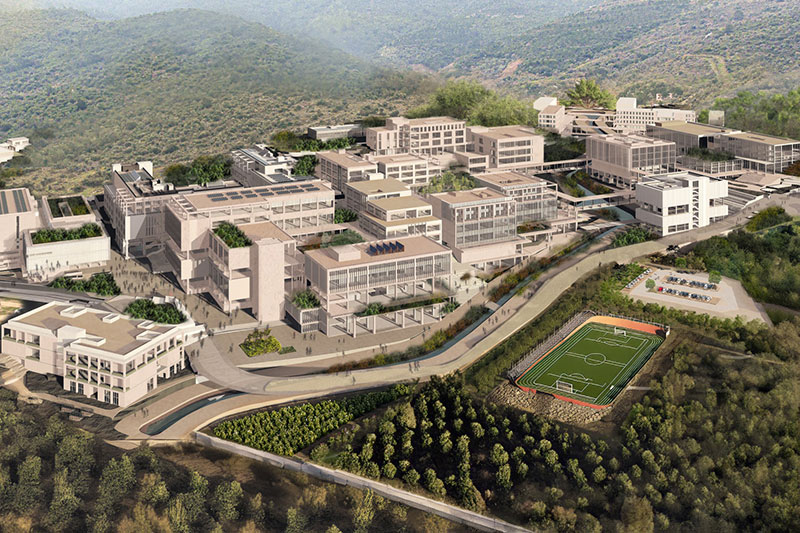
IZMIR UNIVERSITY OF ECONOMICS GÜZELBAHÇE CAMPUS
DetailsGLOBAL CAREER
As Izmir University of Economics transforms into a world-class university, it also raises successful young people with global competence.
More..CONTRIBUTION TO SCIENCE
Izmir University of Economics produces qualified knowledge and competent technologies.
More..VALUING PEOPLE
Izmir University of Economics sees producing social benefit as its reason for existence.
More..
You are one step ahead with your graduate education at Izmir University of Economics.